Animation Layers and Their Role in Guiding Player Engagement Within Today's Slot Machine Interfaces
Erik Krüger · Jun 11, 2026
Animation Layers and Their Role in Guiding Player Engagement Within Today's Slot Machine Interfaces
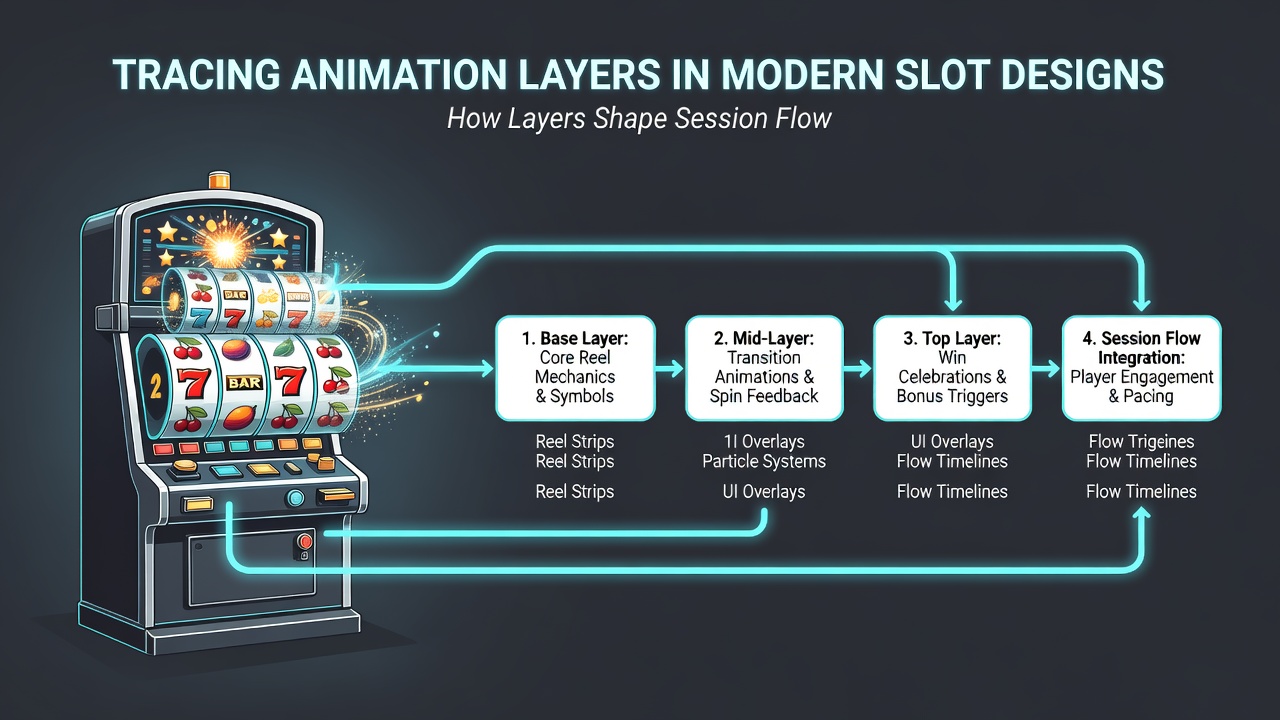
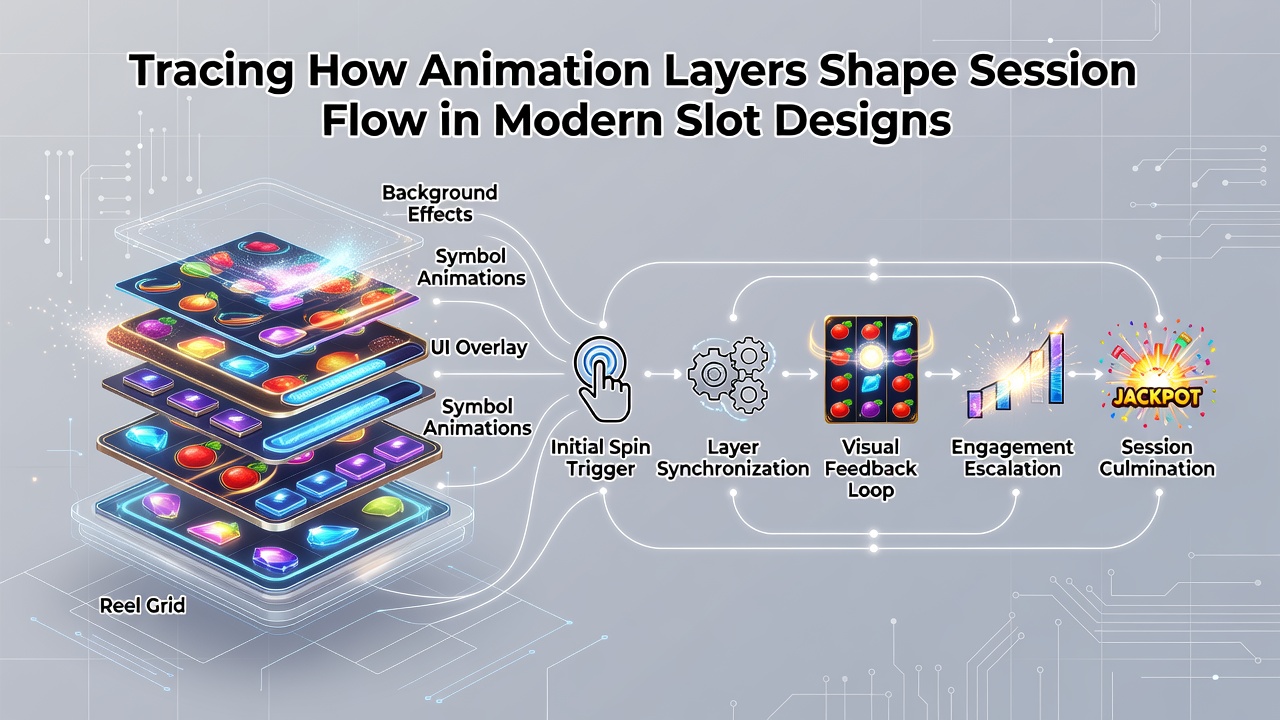
Modern slot designs rely on multiple animation layers that stack background elements with foreground symbols, transitional effects, and interactive highlights, creating a continuous visual rhythm that influences how sessions progress from one spin to the next. Developers build these layers using separate rendering passes so that core reel mechanics remain stable while decorative sequences add depth without interrupting the base game loop, and this separation allows designers to adjust pacing by modulating opacity, speed, and particle density across different screen regions.
Core Components of Layered Animation Systems
Background parallax layers establish environmental context through slow-moving scenery or subtle particle fields that shift independently of reel stops, while mid-ground overlays introduce thematic details such as moving water or shifting shadows that respond to win events. Foreground symbol animations activate only after reels settle, employing short burst sequences that emphasize payout values or trigger additional modifiers, and these timed activations prevent visual overload during rapid spin cycles. Observers note that studios separate these layers in code so individual elements can be toggled or scaled based on device performance metrics, which maintains consistent frame rates across desktop and mobile platforms.
How Layer Timing Affects Spin Cadence
Session flow depends on precise synchronization between reel deceleration and the onset of celebration sequences, because delays longer than 800 milliseconds tend to break immersion while shorter gaps keep momentum intact. Research from the University of Nevada's gaming technology lab shows that staggered animation triggers, where background elements begin fading before symbol highlights peak, produce smoother perceived transitions and reduce player hesitation between spins. Engineers implement easing curves on each layer so acceleration and deceleration feel natural rather than abrupt, and this technique extends average session duration by aligning visual feedback with expected reward intervals.
Device-Specific Adaptations and Performance Balancing
Mobile implementations compress particle counts and simplify shader complexity on lower-end hardware while preserving the same narrative beats that appear on high-resolution displays, ensuring the overall session rhythm stays comparable regardless of device. Data from industry hardware testing indicates that frame drops above 15 percent correlate with shorter play periods, prompting developers to preload secondary animation assets during loading screens. Adaptive layering systems monitor available GPU resources in real time and downgrade non-essential effects without altering payout visibility, which keeps the core engagement loop intact even when thermal throttling occurs.
Integration With Bonus Mechanics and State Changes
Bonus rounds introduce additional animation strata that overlay the base interface, such as expanding wild markers or cascading symbol replacements, and these new layers must blend with existing background motion to avoid jarring visual resets. According to a 2024 report issued by the European Gaming and Betting Association, titles that reuse modular animation components across base and feature modes demonstrate higher retention rates because players recognize familiar motion patterns rather than encountering entirely new visual languages. State transitions between normal play and feature play therefore rely on cross-fading techniques that maintain continuity, allowing the session to evolve without requiring players to relearn visual cues.
Regulatory and Technical Standards Shaping Layer Use
Technical standards from the Malta Gaming Authority require that all animation sequences complete within defined time windows so that outcome determination remains independent of visual presentation, and this rule prevents excessive celebratory loops from masking the random number generator result. Compliance teams test each layer combination against these thresholds using automated scripts that log exact frame counts and trigger timings, ensuring the final build meets both performance and fairness criteria before release. Such constraints encourage efficient asset pipelines where reusable animation modules reduce development overhead while satisfying oversight requirements across multiple jurisdictions.
Conclusion
Animation layers function as an invisible architecture that shapes how sessions unfold by controlling visual density, transition speed, and thematic reinforcement at every stage of play. Studios continue refining these systems through performance data and hardware profiling, producing interfaces where each layer contributes to a cohesive rhythm rather than competing for attention. As rendering capabilities advance, the same principles of modular separation and timed synchronization will guide future designs, maintaining clarity between mechanical outcomes and artistic presentation across evolving platforms.