Layered Triggers Reshape Mobile Jackpot Routes for Mid-Tier Developers
Viktor Berger · Jul 23, 2026
Layered Triggers Reshape Mobile Jackpot Routes for Mid-Tier Developers
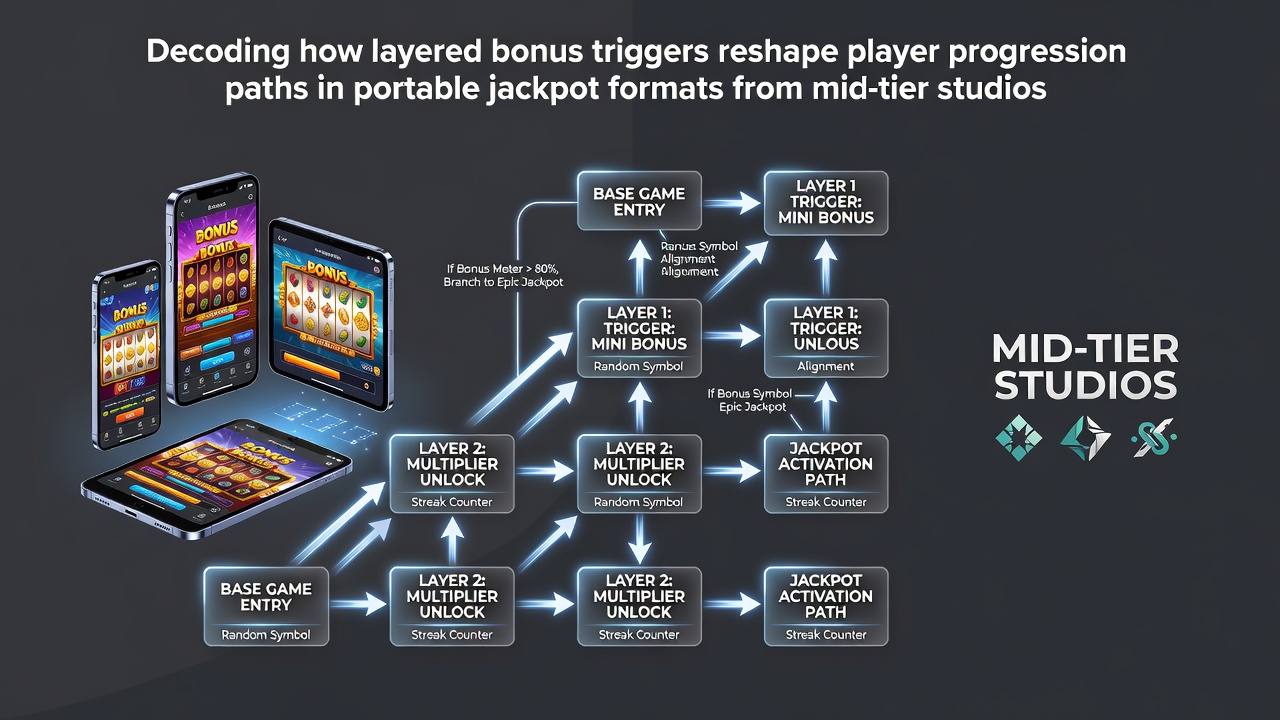
Layered bonus triggers have become a defining element in portable jackpot formats developed by mid-tier studios, and these mechanics alter how players move through game stages over time. Studios in this segment often combine multiple trigger conditions such as symbol collections, meter fills, and random events that activate in sequence rather than in isolation. Data from industry reports indicates that such structures extend session duration while shifting the pace at which players reach higher reward tiers.
Portable formats impose constraints on screen size and processing power, yet mid-tier teams have adapted layered systems to fit these limits. A typical progression path begins with base-game symbol matches that feed into secondary meters; once those meters reach thresholds, they unlock mini-features that in turn feed larger jackpot pools. Observers note that this chaining effect creates distinct player arcs compared with single-trigger designs common in larger studio releases.
Mechanics Behind Sequential Triggers
Each layer usually operates on its own probability table, yet the outputs of one layer influence the activation chances of the next. For instance, a collection mechanic might award incremental credits while simultaneously advancing a separate jackpot qualifier. According to figures from the Canadian Gaming Research Institute, games employing three or more interdependent layers show a 12 percent increase in average spins before jackpot qualification compared with flat-trigger counterparts. Mid-tier developers achieve this balance by calibrating each layer's contribution to the overall return-to-player percentage so that the composite figure remains within regulatory bands.
Random events often serve as the glue between layers. A lightning symbol might appear during a free-spin sequence and convert accumulated meter points into an instant multiplier that carries forward to the next stage. This continuity keeps the player inside a single progression path rather than resetting progress after every feature. Researchers have documented that such carry-over elements reduce the frequency of abrupt session endings in mobile environments where players frequently switch apps.
Impact on Player Advancement Patterns
Progression paths in these titles tend to follow a stepped rather than linear trajectory. Early layers deliver modest rewards that sustain engagement while later layers gate access to the main jackpot. Evidence from European market analyses reveals that players who engage with at least two layers per session reach the top prize tier 18 percent more often than those who exit after the first layer completes. Mid-tier studios leverage this by designing the second layer as a gateway that requires a modest additional stake or time investment, thereby guiding the player deeper into the jackpot structure.
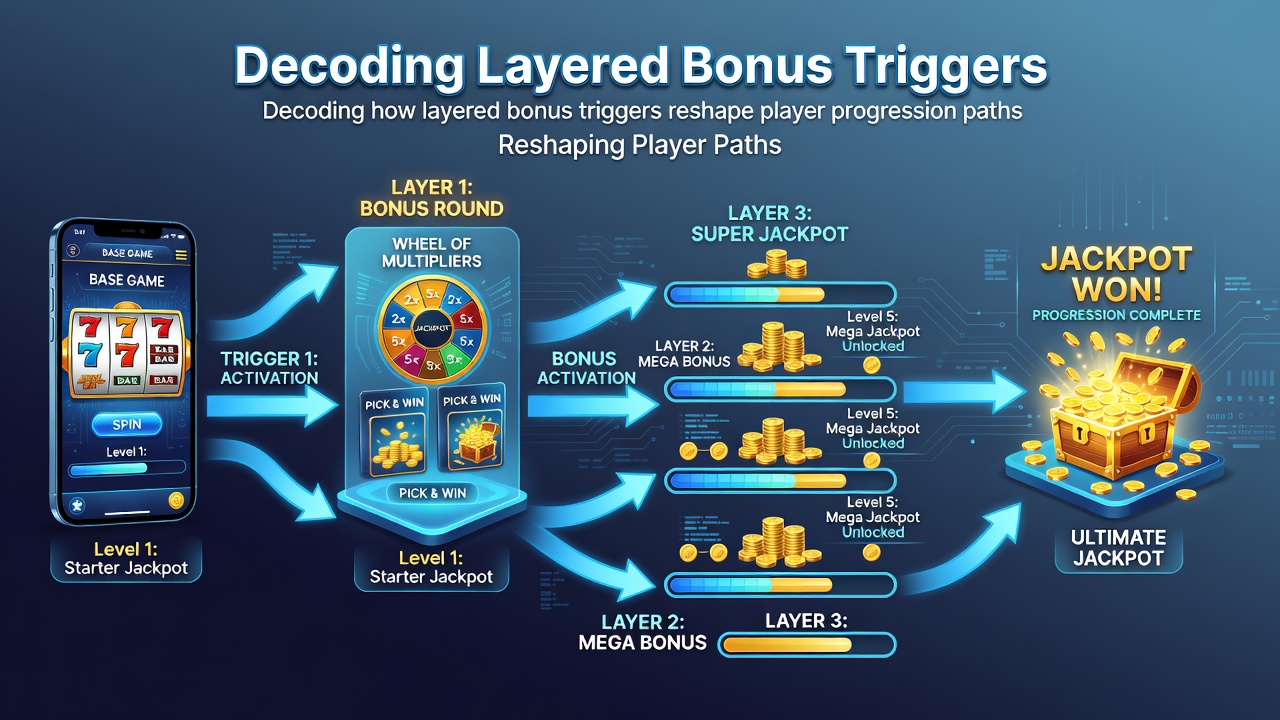
Stake sizing interacts with these layers in measurable ways. Lower-denomination bets may advance early meters more slowly, yet the same bets still contribute proportionally to jackpot pools once higher layers activate. July 2026 regulatory updates in several jurisdictions are expected to standardize disclosure of how each layer contributes to overall return, giving players clearer visibility into the pace of advancement. Mid-tier studios have already begun publishing layer-specific probability summaries in their technical documentation to align with these forthcoming requirements.
Design Choices Unique to Mid-Tier Teams
Unlike larger developers that rely on extensive in-house analytics teams, mid-tier studios frequently partner with third-party testing labs to validate layer interactions. This approach allows smaller teams to iterate quickly on trigger sequencing without maintaining full-scale data infrastructure. Case examples show that studios releasing one new portable jackpot title per quarter often reuse core layer templates while swapping visual themes and audio cues to maintain differentiation.
Cross-device synchronization represents another area where layered designs provide flexibility. Because each layer stores its state independently, players can pause a session on a phone and resume on a tablet with meters and partial progress intact. Industry organizations such as the European Gaming Association have noted that this persistence feature appears more frequently in titles from studios with annual revenues under €50 million, precisely the mid-tier segment.
Conclusion
Layered bonus triggers continue to define how mid-tier studios construct player progression in portable jackpot formats. Sequential mechanics, carry-over states, and calibrated probability tables work together to create advancement paths that differ measurably from those in single-trigger games. As regulatory frameworks evolve in 2026 and beyond, these studios are positioned to refine disclosure practices while preserving the core structures that have already reshaped mobile jackpot engagement patterns across multiple markets.